We want to create the biggest online listing collection of Log Cabins around the world!
Please add you short stay log cabin rentals now.
Enjoying the raw nature, while staying in log cabin is one the best ways to de-stress yourself from your busy daily life. Finding a nice log cabin for your vacation can be hard, but look no further as we collect the most beautiful log cabins around the world !
10 Log Cabins found
Europe
United Kingdom of Great Britain & Northern Ireland
Scotland
Wales
England
North America
United States of America
California
Colorado
Wyoming
List your log cabin on this page?
Add linkLife in a log cabin: wood, fire, water and the quiet of the forest
Open the door of a log cabin and the first thing you notice is the smell: resin, old smoke and warm timber. The walls are not a surface over something else; they are the structure itself, whole trees stacked and fitted together. For many people, a few days in a log cabin by a lake or deep in a forest is the most restful holiday there is.
This guide looks at the log cabin as a building and a way of living for a few days: how cabins are made, how to handle the fire and the sauna, what the forest around you is like, and what to check before you book.
How a log cabin is built
People have built with logs wherever tall, straight trees were plentiful, which is why log building traditions are strongest in the northern forests of Scandinavia, the Baltic countries, Russia and North America. The basic idea is simple: logs are laid horizontally on top of each other and locked together at the corners. The details vary a lot.
- Round logs keep their natural shape, often with the bark removed and the surface hand-peeled. They give the classic rustic look.
- Hewn or square logs are shaped flat on the sides, which gives a tighter wall and a more traditional farmhouse feel, common in older Nordic and Baltic buildings.
- Corner joints such as saddle notches and dovetail notches hold the walls together without much metal at all.
- Chinking and sealing fill the gaps between logs. Traditional builders used moss or other natural materials; modern cabins use tightly fitted logs and sealants.
- Timber-frame and log-look cabins are built with a frame and wooden cladding. They are cosy too, but not whole-log buildings.
Thick logs store heat and release it slowly, so a well-built cabin stays pleasant through cold nights and cool in summer. Wood also moves: it settles and shrinks over the years, which is why you may notice small gaps, uneven doors or a crack in a log. That is part of the character, not a fault.
Keeping warm: fireplaces and wood stoves
Heat is at the centre of cabin life. Many cabins have an open fireplace, a cast-iron wood stove, or a large masonry stove that absorbs heat and radiates it for hours.
If you have never used a wood stove, ask the owner to explain it on arrival. A few general rules: start with dry kindling and small pieces, open the air vents fully while the fire gets going, then add larger logs and close the vents a little to slow the burn. Never leave a fire unattended, keep towels and clothing away from the stove, and check that the smoke alarm works. Ask whether firewood is included, where it is stored, and how the ashes should be disposed of. In dry summers, outdoor fires may be banned, so always check local fire rules before lighting a campfire or barbecue.
The sauna, and how to use it well
In Finland, a cabin without a sauna is hard to imagine, and many cabins in Sweden, Norway, Estonia and Latvia have one too. Some are wood-fired, some electric, and a few lakeside cabins have a traditional smoke sauna. Nordic sauna habits are relaxed but have their own etiquette:
- Shower before you go in, and sit on a small towel.
- Nudity is normal among family and friends in the Nordic countries, but nobody will mind a towel or swimsuit.
- Throw water on the stones for steam, called löyly in Finnish, but ask the others before adding more.
- Cool off between rounds with a swim in the lake, a cold shower or, in winter, a roll in the snow.
- Drink plenty of water, and do not mix the sauna with alcohol.
Outside the Nordic countries, cabins are just as likely to have an outdoor hot tub on the deck. Ask how it is heated, how long it takes to warm up, and whether there are any rules for its use.
Where the log cabin tradition lives
In Finland, the summer cottage or mökki by a lake is a national institution. Sweden has its red and wooden stugor in the forest, and in Norway the hytte is part of family life. Russia has a long history of wooden houses, the izba, often with carved window frames, and Estonia and Latvia have forest and lakeside cabins with saunas. In Canada, log cabins sit on lakes across the country, and in the United States they are found around the Great Smoky Mountains, in the forests of the Pacific Northwest and by the lakes of the Midwest. Further south, New Zealand and Australia have timber cabins in forests and near national parks, and in Chile's Patagonia wooden cabins look out on lakes, forests and mountains.
Remember that the seasons are reversed in the Southern Hemisphere. A cosy winter cabin with a roaring stove in New Zealand or Patagonia means June to August, while that is high summer by the lakes of Finland and Canada, with long light evenings and, in the far north, the midnight sun.
Wildlife, insects and the forest around you
Part of the magic is what lives around the cabin. Depending on the region, you may see deer, moose, foxes, beavers, eagles, loons on a Canadian lake or kangaroos near an Australian cabin. In parts of North America and northern Europe, bears live in the forests. Follow local advice: store food indoors or in bear-proof containers, never feed wild animals, and keep a respectful distance.
Insects are the less romantic side of forest life. Mosquitoes can be intense near lakes in the northern summer, and black flies and ticks are common in many forest regions. Bring repellent, long sleeves for the evening, and check for ticks after walks.
Water, wells and remote roads
Many cabins are proudly off the beaten track, which brings practical questions. Some get their water from a well or a lake and may ask you to bring drinking water. Some have a composting or outdoor toilet instead of a flush toilet, and a few have no running water at all. Electricity may come from solar panels or a small generator, and phone signal can be weak or absent. The last stretch of road may be a gravel or dirt track, which can be muddy after rain or snowy in winter, so check whether you need a four-wheel-drive vehicle or winter tyres, and stock up on food before you arrive, as the nearest shop may be far away.
Questions to ask before you book
- Is it a whole-log cabin, or a timber-frame cabin with wooden cladding?
- How is the cabin heated, and is firewood included?
- Is there a sauna or hot tub, and how is it heated?
- Where does the water come from, and is it safe to drink?
- Is there a flush toilet and a shower inside the cabin?
- Is there electricity, Wi-Fi and phone signal?
- What is the access road like in the season we are coming?
- Is there a lake or river for swimming, and is a boat or canoe available?
- Are pets allowed, and are there any wildlife rules we should know?
Tips for a good cabin stay
Arrive in daylight so you can find the cabin and learn how everything works. Bring a headlamp, warm socks and indoor shoes, since wooden floors can be cool. And set aside at least one evening with no plans at all: just the fire, the lake and the sounds of the forest.
Book your log cabin directly
The log cabins on this page are grouped by continent, country and region. Every link leads to the owner's own website, where you can look at the cabin, check availability and book directly. Do you rent out a log cabin? Add your link for free with the button above and let travellers find your cabin in the woods.
Looking for an awesome place to spend your holiday?
Or want to advertise your houseboat, lighthouse, treehouse or glamping?
Check these links below!
Blog posts
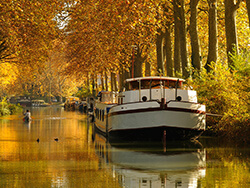
Barge river cruises in France
River cruises in France are the next luxury holiday destination. Cruise your private barge with cook down the French rivers.
Read more..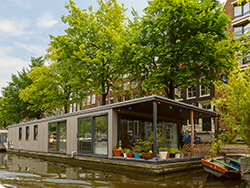
Rent a houseboat in Amsterdam
A houseboat is a great place to stay when visiting Amsterdam. Stay close to the city center but have a lot of private space.
Read more..